Dressmaking and Sewing Terms Explained - A Beginner’s Guide
If you are new to dressmaking, or sewing in general, understanding commonly used terms can feel like learning a new language. Below is a simple beginner’s glossary. We’ve also added links to other blog posts for some of the terms, where you can dive into more detail.
You can also read more general information for beginners here: https://www.sussexseamstress.com/sewing-tips-blog/dressmaking-tips-for-complete-beginners
A list of our most popular beginner patterns can be found here: https://www.sussexseamstress.com/sewing-tips-blog/most-popular-beginner-sewing-patterns
A - C
Armscye: The technical term for the armhole opening where the sleeve is attached.
Backstitch: A few reverse stitches sewn at the beginning and end of a seam. This locks the threads in place so that the stitching doesn’t unravel.
Baste (or Basting): Long, temporary stitches used to hold fabric pieces together before the final stitching. This can make the final stitching easier as the fabric pieces will move less. They are sometimes pulled out later.
Bias: The diagonal direction of a woven fabric (at a 45-degree angle to the threads). Cutting fabric "on the bias" gives it a fluid drape and a little natural stretch. See Warp and Weft below.
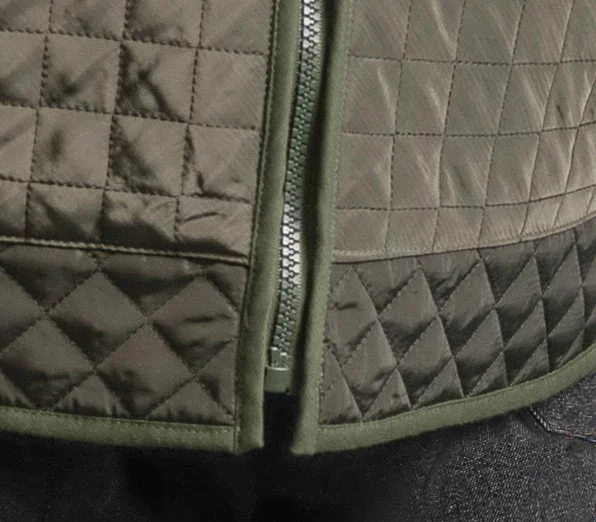
Binding
A narrow strip of fabric folded over and stitched to wrap neatly around a raw edge. You will often see this used to finish necklines and armholes. It is also common to finish quilted fabrics with binding - here’s an example from the Selmeston Jacket.
Bobbin: The small spool that holds the bottom thread inside your sewing machine, creating the lower half of your stitches.
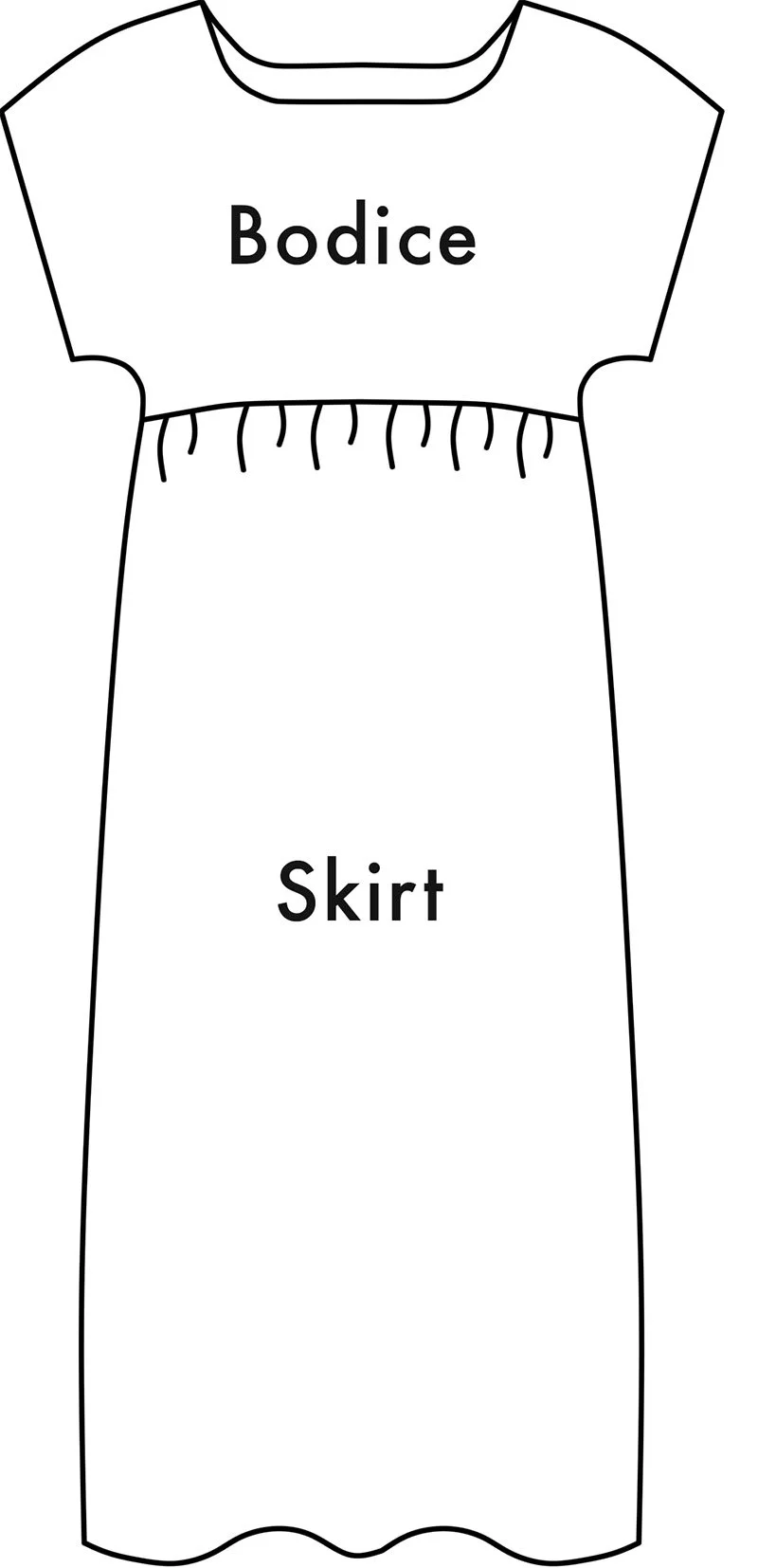
Bodice
The upper part of a garment (like a dress or blouse) that covers the torso from the shoulders to the waist. A dress will often consist of a bodice and a skirt, with each being made separately and then joined. The image shows an example of the Amberley Dress.
Casing: A fabric tunnel or channel sewn into a garment, usually to house a piece of elastic or a drawstring (like in an elasticated waistband).
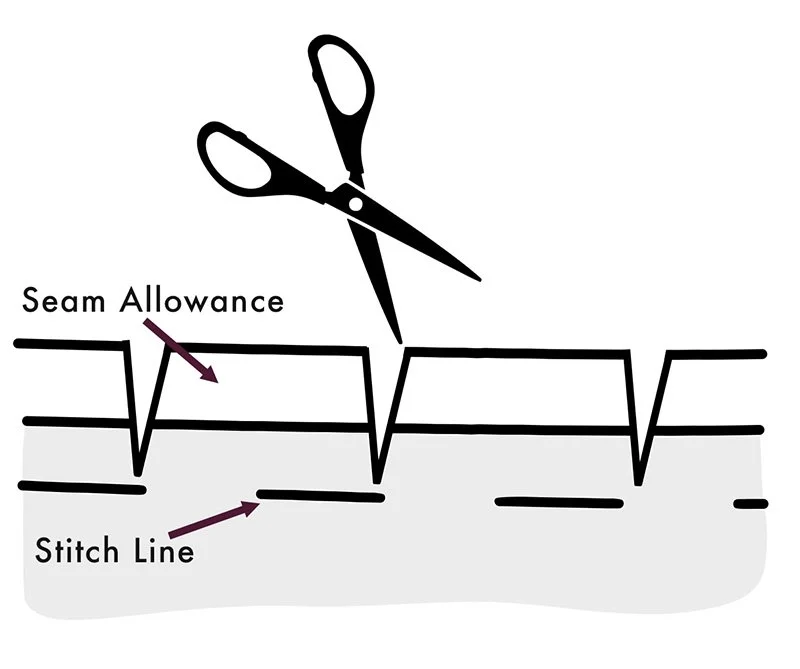
Clipping
Making small, shallow snips into the seam allowance before turning the fabric right-side out. This can relieve tension on curves so that features like necklines and armholes lie flat and smooth. Sometimes used in conjunction with seam allowance grading (see below).
Crossgrain: The direction of fabric threads running perpendicular to the selvedge.
D - F
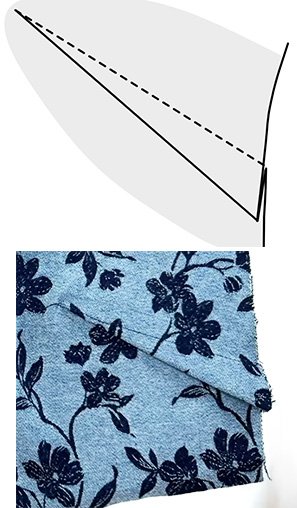
Darts
Wedge-shaped folds stitched into a flat piece of fabric. They are used to shape a garment to the curves of the body, especially around the bust and waist. Read about sewing darts here: https://www.sussexseamstress.com/sewing-tips-blog/how-to-sew-darts
Ease: The difference between your actual body measurements and the measurements of the finished garment. This is the extra room built into a pattern to let you move, sit, and breathe comfortably. There is also “design ease” which is the ease built in as part of the style of the garment, e.g. a loose fitting vs. tight fitting style. Read more here: https://www.sussexseamstress.com/sewing-tips-blog/sewing-pattern-sizing-charts-and-toiles
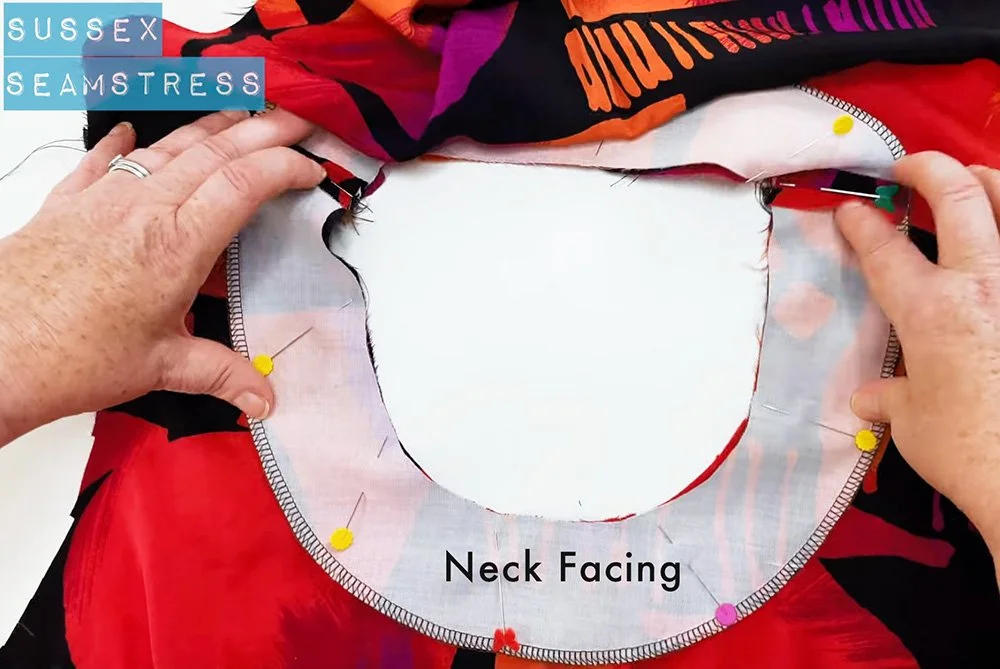
Facing
A separate fabric piece shaped to match an edge (like a neckline) and sewn to the inside of a garment. It neatly hides raw edges so no stitching shows on the outside. In the image we can see a neck facing being applied to the Southwater Dress.
Feed Dogs: The small, metal teeth under the sewing machine's needle plate that move the fabric smoothly forward as you sew.
Fold Line: A marking on a pattern piece indicating that the edge must be placed against a folded edge of your fabric. When you cut around the pattern and unfold the fabric, it produces a symmetrical piece of fabric.
French Seam: A premium, self-enclosing seam where the raw edges are completely hidden inside a neat little fold. It is the ultimate finish for delicate, sheer, or easily frayed fabrics. Read more about seam types here: https://www.sussexseamstress.com/sewing-tips-blog/how-to-sew-common-seams

Full Bust Adjustment (FBA)
A pattern alteration used to add extra space across the chest area of a bodice without altering the width of the shoulders or neckline. It ensures a comfortable, flattering fit for those whose bust measurement is larger than the standard pattern size accounts for. You can find a full guide to FBA’s here: https://www.sussexseamstress.com/sewing-tips-blog/full-bust-adjustment-tutorial
G - I
Gathering: Pulling on temporary stitches to draw a longer piece of fabric into a shorter one.
Grading (Seam Allowance): Trimming the layers of a seam allowance to reduce bulk. It’s common to trim down one or both sides of the seam allowance by half to reduce bulk in areas like necklines, pocket openings, etc. Not to be confused with pattern (size) grading, which is adjusting a pattern to fit a different size & shape of body.
Grainline: The direction of the threads running through a woven fabric. Aligning your pattern pieces with the grainline ensures your finished garment hangs and drapes correctly. Read more about grain here: https://www.sussexseamstress.com/sewing-tips-blog/how-to-work-with-grain
Interfacing: An extra layer of fabric (usually iron-on) applied to the inside of a garment. It adds stiffness, strength, or structure to areas like facings, collars, and button stands. Read tips about interfacing here: https://www.sussexseamstress.com/sewing-tips-blog/how-to-apply-interfacing-by-block-cutting
L - O

Lining
An inner layer of fabric sewn inside a garment to hide the interior seams. It makes the clothes easier to slip on and feel soft against your skin. The image shows the lining inside a Firle Coat.
Muslin or Calico: A cheap, plain-weave cotton fabric used to test out a pattern and check the fit before cutting into your expensive final fabric. See Toile below.
Nap: The raised, directional surface of certain fabrics like velvet, corduroy, or faux fur. You should cut all your pattern pieces facing the same direction so the fabric catches the light uniformly.
Notch: Small markings or triangles printed on pattern pieces. Snipping these lightly into your seam allowance or marking them with a suitable chalk/pen helps you align different fabric pieces correctly.
Notions: A general term for all the small accessories and supplies used to complete a garment, such as buttons, zips, thread, and elastic.
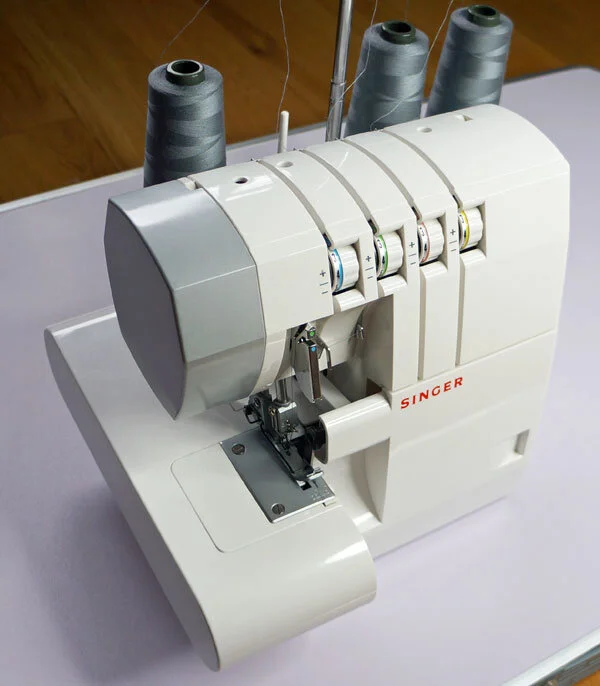
Overlocker or Serger
A specialized machine that can (optionally) trim the edge of the fabric while wrapping thread neatly around it. It prevents fraying, add flexibility and gives the inside of your clothes a professional, shop-bought look. Beginners don’t need an overlocker, but you can find some reasons why you might consider one later here: https://www.sussexseamstress.com/sewing-tips-blog/should-i-buy-an-overlocker
P - R
Pattern Weights: Heavy objects used to hold your paper pattern flat against your fabric.
PDF. A digital file format (it stands for “Portable Document Format”). Downloadable sewing patterns are in PDF format and are intended to be printed at home or sent to copy shops for printing.
Pinking Shears: Scissors with a zigzag blade that cut a sawtooth pattern into fabric edges, which can help prevent fraying in some fabrics.
Pleat: A fold created by doubling fabric back on itself and securing it in place. It adds tailored fullness and structured style to skirts and trousers.
Presser Foot: The detachable attachment on your sewing machine that holds the fabric flat against the feed dogs while you sew.
Pressing: The act of lifting and lowering your iron onto the fabric, rather than sliding it back and forth. Pressing your seams open as you sew is the secret to a professional-looking garment.
Raw Edge: The unfinished edge of your fabric. If left untreated, raw edges will unravel and fray in the wash. Raw edges are often finished with a zig-zag stitch or overlocker, or they are encased, e.g. with a facing or french seam. Another option is bias binding.
Right Side / Wrong Side: The "right side" is the side of the fabric meant to be seen on the outside. The "wrong side" is the back or inside of the fabric, which remains hidden. Pay close attention to sewing instructions as they will indicate which sides of the fabric pieces should be placed together when stitching, e.g. it is common for instructions to say “right sides together”, meaning the “outsides” of the pieces should be facing each other.
S

Seam Allowance
The distance between the cut edge of the fabric and the line where you actually stitch. The size of the seam allowance varies by manufacturer and pattern, so always check the instruction manual (Sussex Seamstress patterns have a 1cm seam allowance, but 1.5cm is also common).
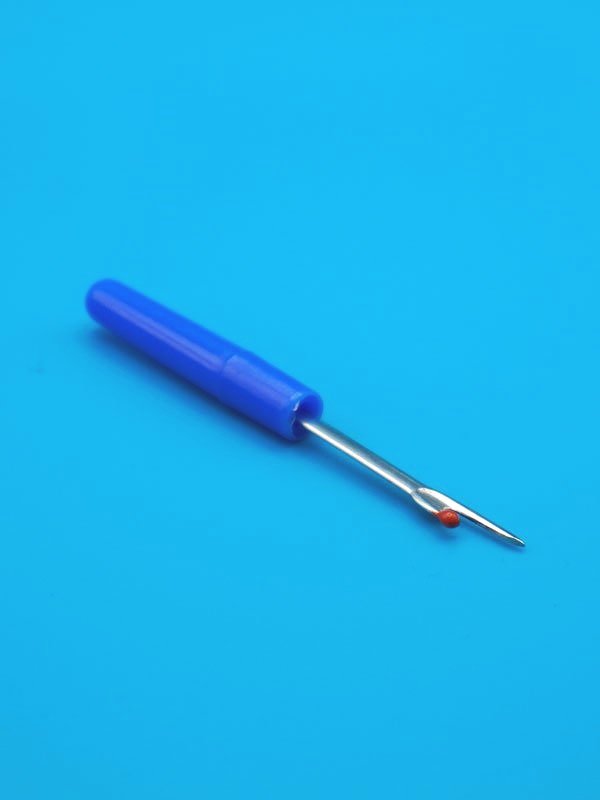
Seam Ripper
A small hand tool with a tiny curved blade used to cut and remove unwanted stitches. Often used to correct mistakes.
Selvedge: A finished, tightly woven border on the lengthwise edges of fabric. It often features the designer's name and colour-matching dots.
Shirring: Rows of parallel gathering sewn with elastic thread in the bobbin, creating a highly stretchy and form-fitting fabric panel. For an example of shirring see the back of the Littlehampton Dress or take a look at https://www.sussexseamstress.com/sewing-tips-blog/how-to-sew-a-shirred-cuff
Slipstitch: A nearly invisible hand stitch used to join two folded edges together or to neatly secure a hem from the inside.
Staystitching: A line of stitching sewn just inside the seam allowance on curved or diagonal edges prior to further construction. It keeps fabric from stretching out of shape while you handle it.
Stitch Length: The length of each individual stitch made by your sewing machine. Short stitches are used for tight, strong seams, while long stitches are used for basting or gathering.
T - Z
Tack (or Tacking): Another term for hand-basting. It refers to quick, loose hand stitches used to hold a specific spot temporarily in place.
Tension: The amount of tightness or pull on the sewing machine needle and bobbin threads. Proper tension ensures stitches look balanced and neat on both sides of the fabric.
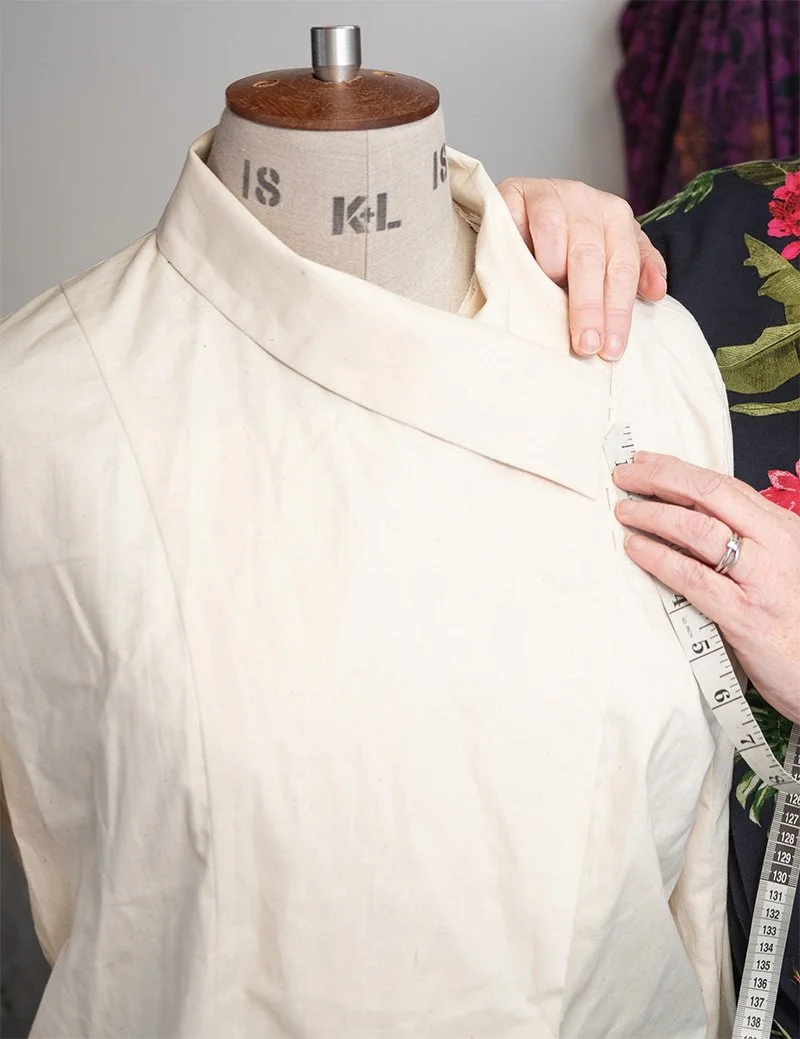
Toile
A French term for a test version of a garment made from cheap fabric (like calico) to check the fit and design before cutting your final fabric. Read more about toiles here: https://www.sussexseamstress.com/sewing-tips-blog/sewing-pattern-sizing-charts-and-toiles
Topstitch: A visible line of decorative or functional stitching sewn on the outside of a garment, usually close to a finished seam or edge.
Understitch: A line of stitching sewn close to the seam line, capturing the seam allowance and the facing or lining together. This forces the facing to roll neatly to the inside so it stays hidden from view.
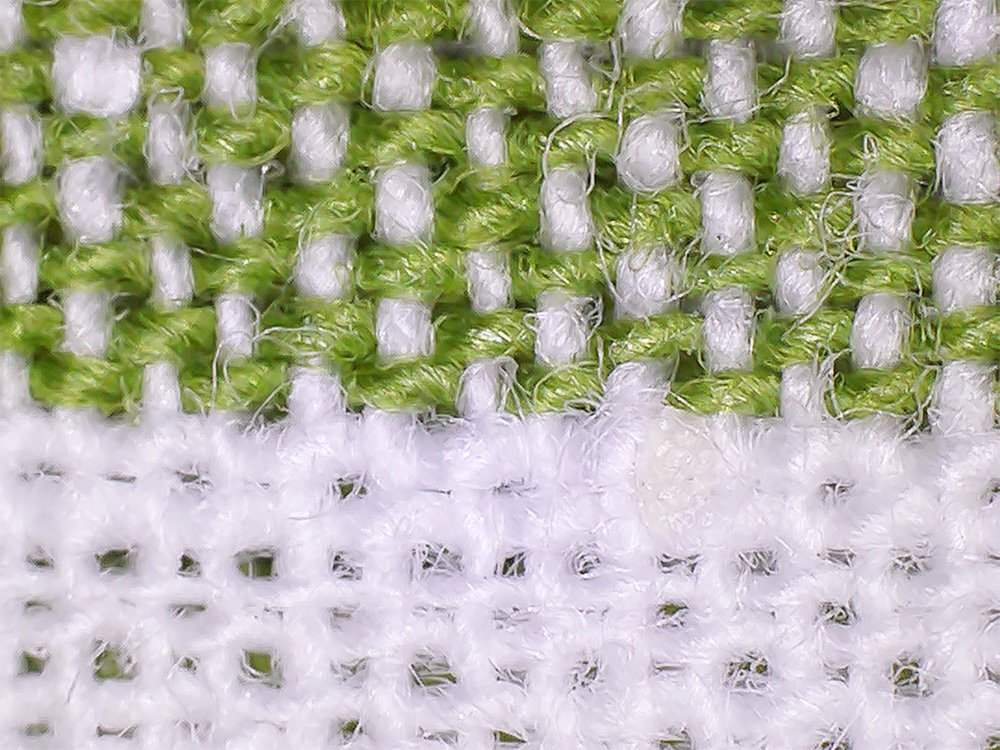
Warp and Weft
The two sets of threads that make up woven fabric. Warp threads run lengthwise (parallel to the selvedge), while weft threads run crosswise (from side to side). Read more about woven fabrics here: https://www.sussexseamstress.com/sewing-tips-blog/how-to-work-with-grain
Fabric Requirements or Yardage: The total length of fabric you need to buy to sew a specific garment pattern in your size.
Zigzag Stitch: A back-and-forth stitch pattern on standard sewing machines. It is highly versatile and can be used to finish raw edges or to sew stretchy knit fabrics. Read more about stitch types here: https://www.sussexseamstress.com/sewing-tips-blog/basic-stitch-types-and-uses

Sussex Seamstress is an independent pattern studio, based in Sussex, UK.
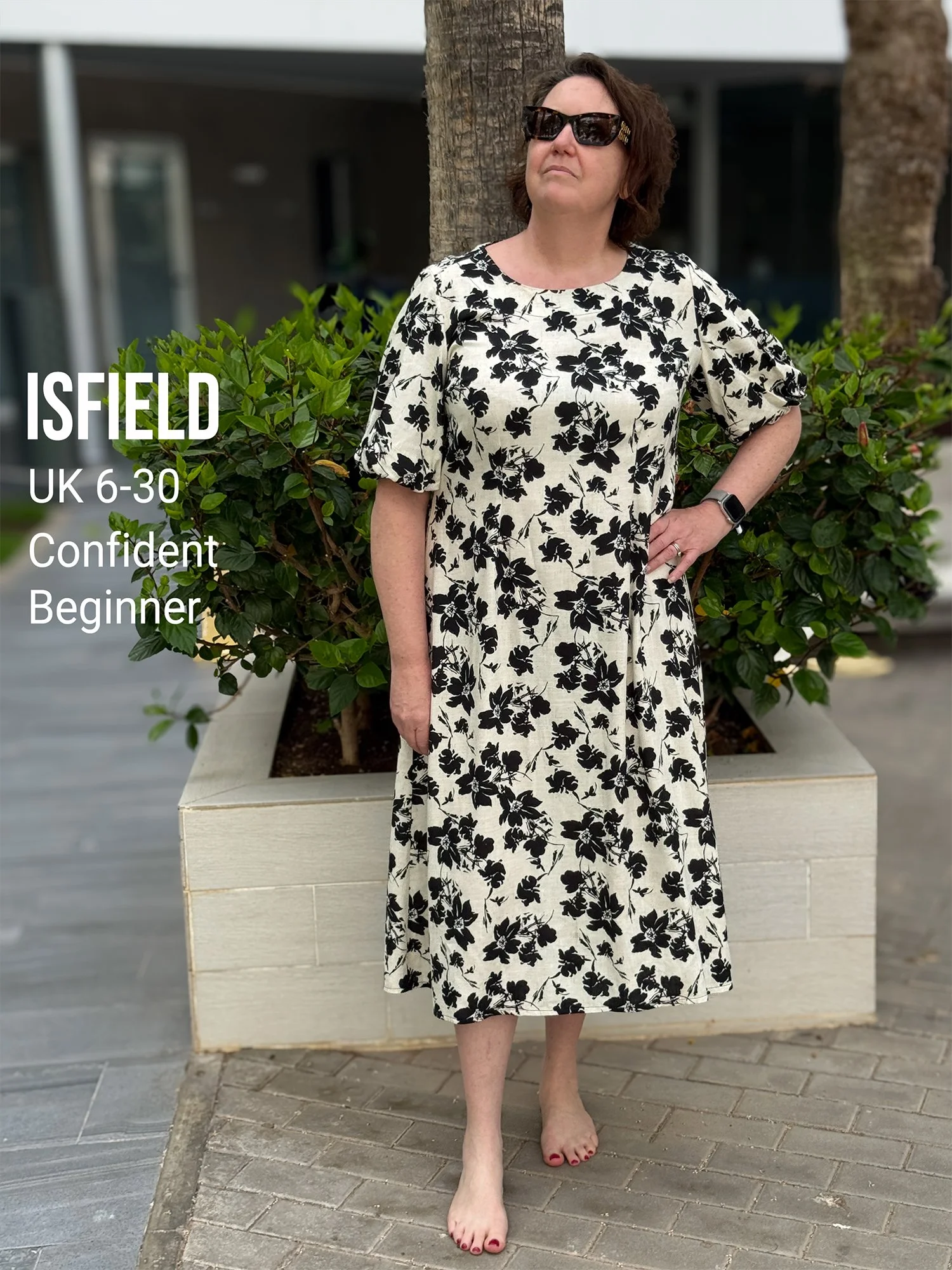
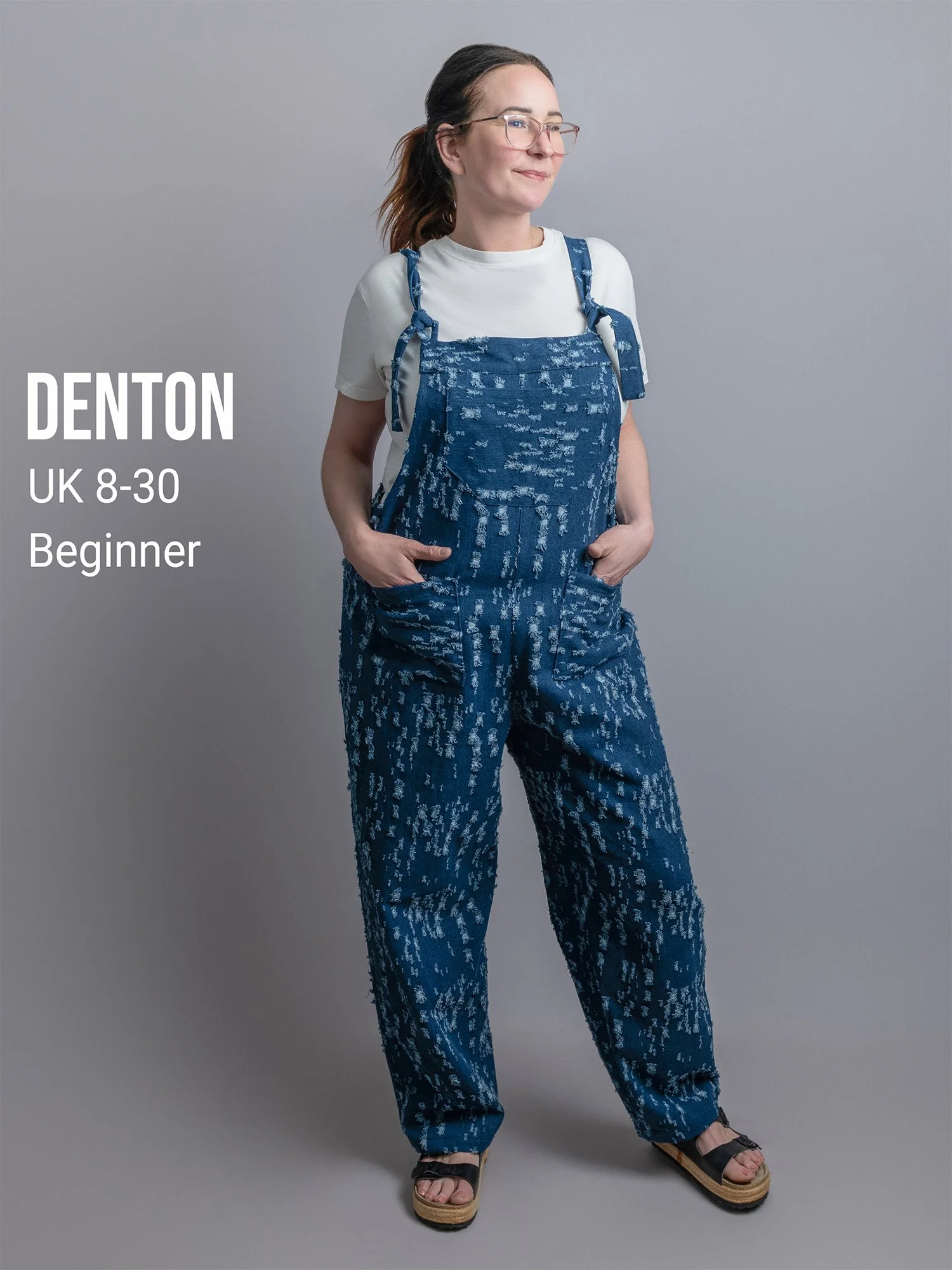
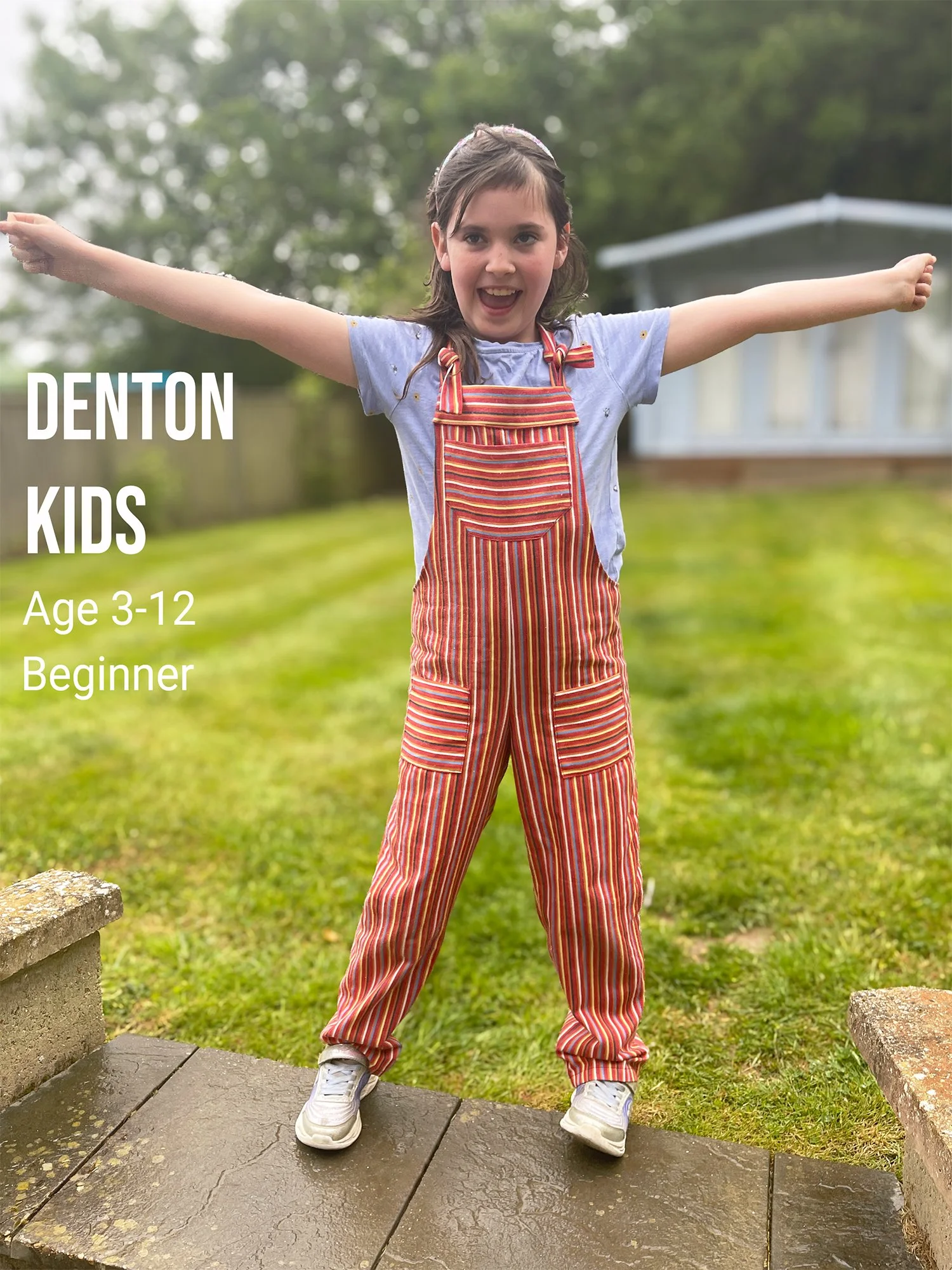
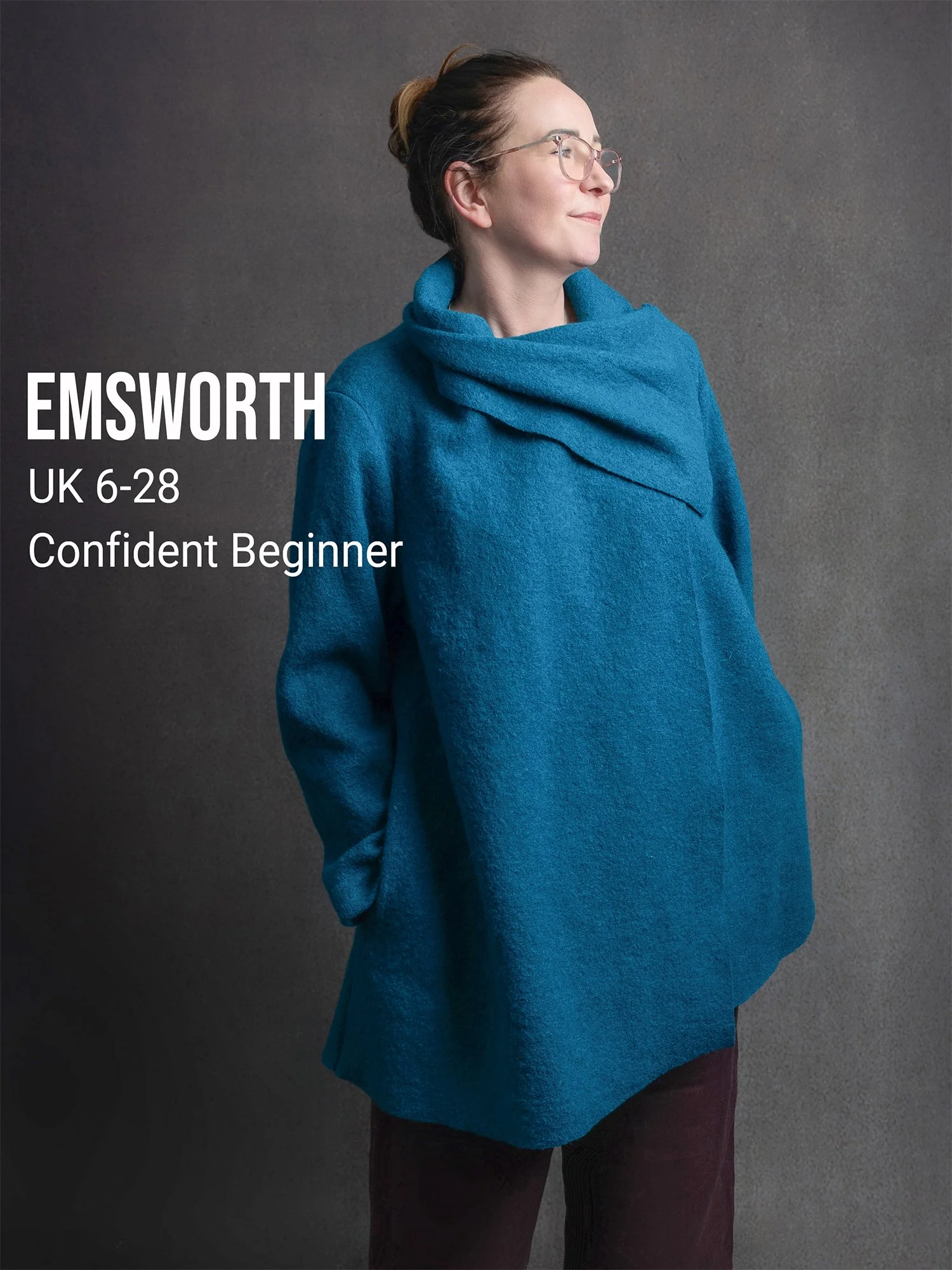
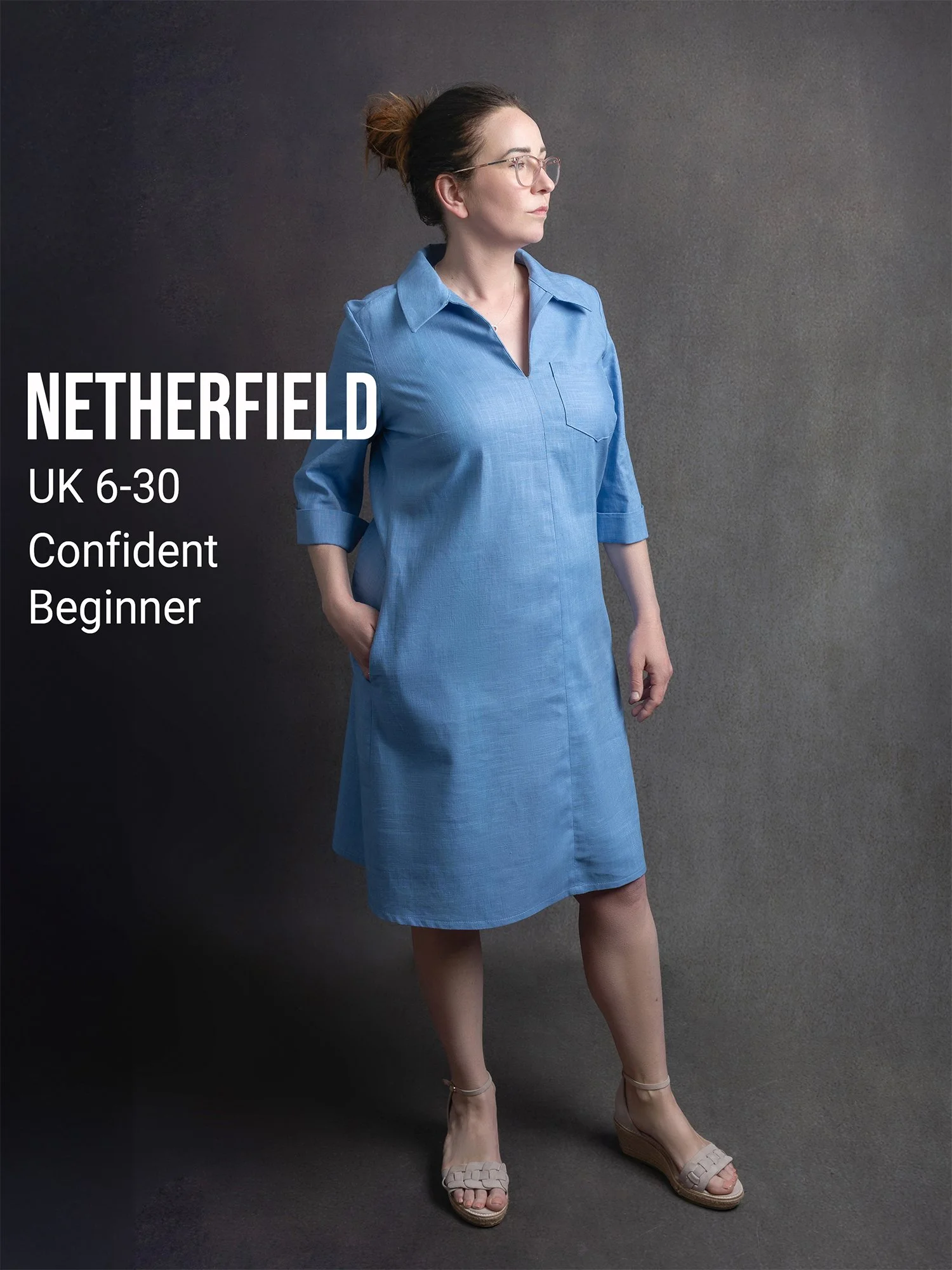
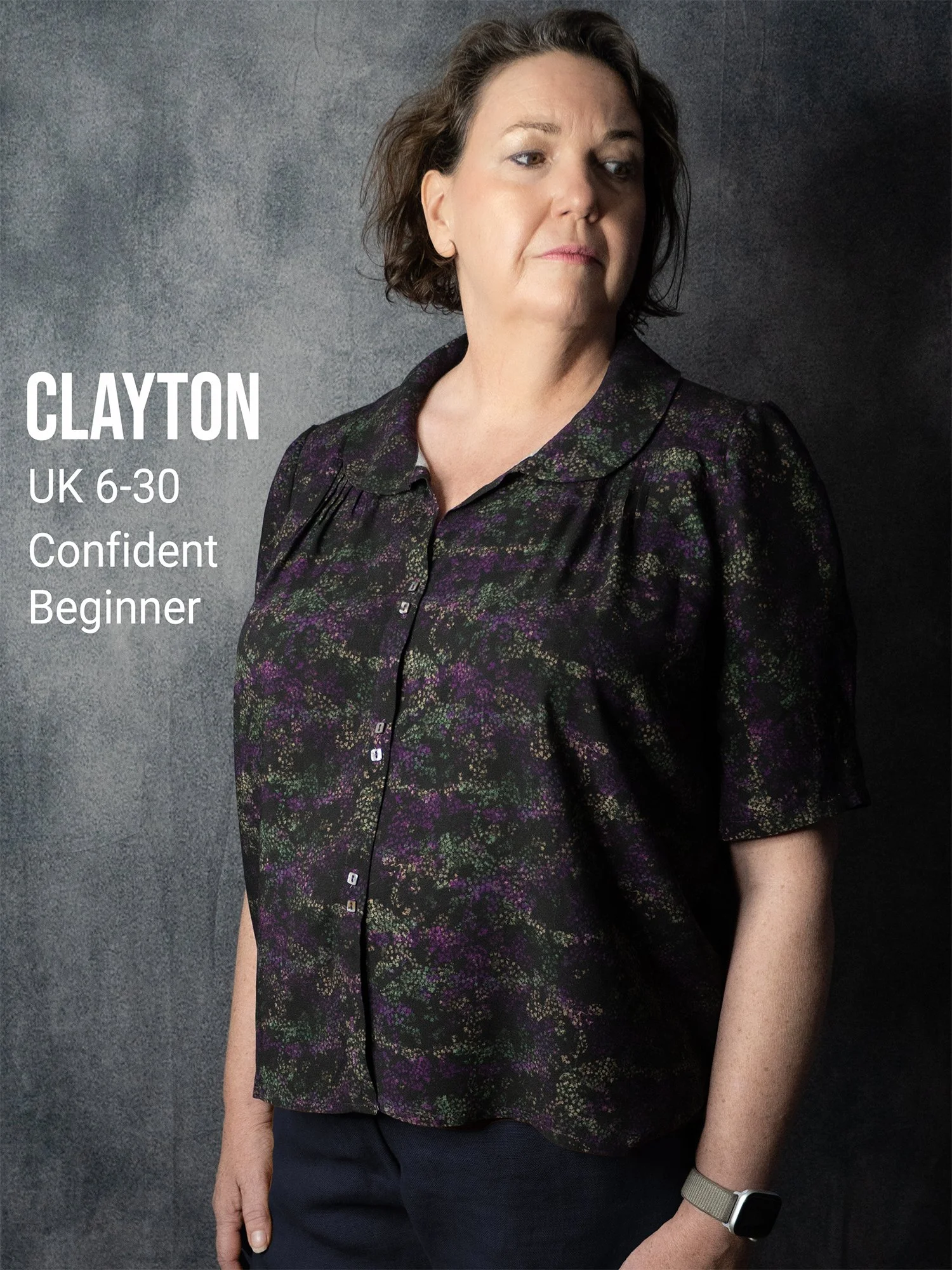
Check out our range of dressmaking patterns in sizes 6-30. A Selection of our recent patterns is shown below. Thank you!



The Rusper Blouse combines vintage-inspired details with a relaxed, modern silhouette. The open neck blends into a continuous collar band that extends into neckties, which can be tied in a classic bow, a loose knot, or left elegantly draped.
Delicate gathering at the front, shoulders and back neck creates texture,and gives a comfortable, fluid fit across the bust and shoulders.
The elbow-length Raglan sleeves feature subtle volume gathered into a neat cuff, finished with a self-tie closure.
Whether you dress it up and tuck it into a tailored skirt or keep it casual and flowing over your favourite jeans, the Rusper can be adapted to all occasions, providing a versatile addition to your me-made wardrobe.
This pattern is also available as part of a full kit with pattern, fabric and notions - you can find it on the Kit Page (while stocks last).
Sizing
UK: 6 - 30.
US: 2-26. EU: 32-56.
Suggested Fabrics
Make up in a fine viscose or cotton lawn, cotton voile or broderie anglais for a soft casual feel to wear with jeans or a casual denim skirt. Alternatively, use a crepe-de-chine , Georgette or silk satin to elevate the look for office or evening. Wear with a tailored skirt or straight leg trousers for a showstopping look at special events.
Fabric Requirements
Up to Size 30 : 140cm wide = 2.1m, 115cm wide = 2.8m
Up to Size 22 : 140cm wide = 1.7m, 115cm wide = 2.5m
Note: No provision has been made for pattern matching the CF. If required, additional fabric will be needed (fabric dependant).
Notions
• Thread
Skill Level
Advanced Beginner
Format
This is a paper pattern, we aim to ship patterns within 1-2 working days.
If you would prefer a PDF digital download pattern you can order it here: Rusper Blouse PDF
Want a 10% Discount? Join our mailing list